
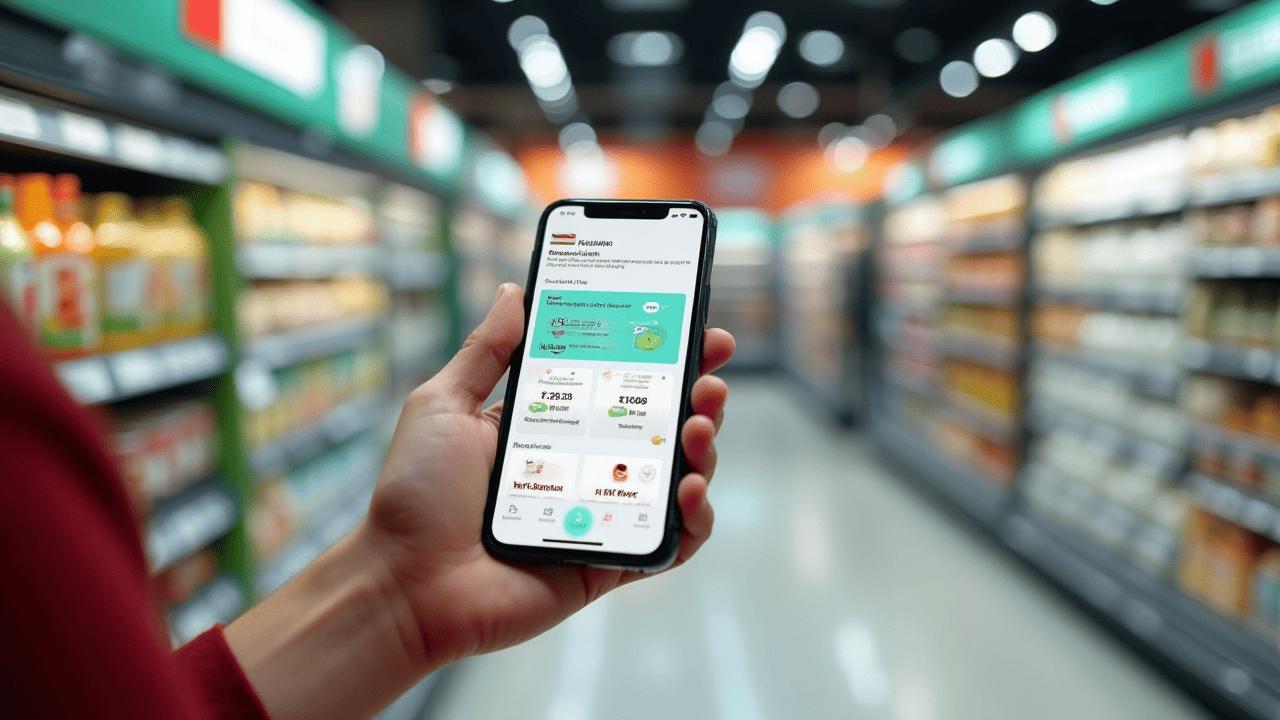

Shopping on quick commerce applications has become a daily endeavor for most households in India these days. This is inferred from the estimated 9.5 million orders recorded daily by the six major quick commerce apps, consisting of, Swiggy Instamart, Blinkit, Zepto, Amazon Now and Flipkart Minutes (Gupta, 2026). In this highly competitive industry, Swiggy Instamart alone recorded 412.2 million orders in FY26 (Deshmukh, 2026), further highlighting the shift in consumer behavior toward instant purchases. This integration of quick commerce leads to the question of their functioning and the multiple parameters they may or may not adopt to systematically guide a consumer towards a particular purchasing behavior. This article mainly focuses on evaluating the influence of design to nudge towards the deal stores offered by such applications and the effect on cart-value. It further analyzes the benefit of such stores for the platforms themselves, centering on Swiggy Instamart’s commonly found ₹9 store. It achieves this by applying Ariely’s (2009) zero price effect and Thaler’s (2008) mental accounting, along with digital choice architecture (Weinmann et al., 2015) to the study at hand. The study excludes macroeconomic topics such as fleet logistics and supply chains, keeping it theoretical.
Digital Choice Architecture
Weinmann et al. (2015) explain that choices can be affected by a minor unintentional feature, meaning no choice is truly independent of the environment it is presented in. The design ‘nudges’ a consumer in a certain direction. This concept, when applied to digital platforms, is termed “digital nudging”; it is defined as the use of user-interface design elements to guide people’s behaviour in digital choice environments (Weinmann et al., 2015). For example, in the version of Swiggy Instamart used for the study, when a customer opens the application, they can see a single-digit store, with the price animated and in bold. Clicking on it, one can observe an array of items with their original prices crossed out and the promotional price emphasised. At the top is a banner in purple with text reading ‘Items from ₹9 every day!’. The price and the word ‘everyday’ are made to stand out by using a different colour (yellow). The checkout requirement is mentioned in a smaller font. This emphasis may prompt the customer to consider the deal and adjust their order accordingly, incentivising greater value purchases.
Near-Zero Price Effect
The interface design complements Ariely’s zero-price effect (2009). The value being near-zero triggers irrational excitement in consumers. While behavioural theory distinguishes between absolute zero and single pricing due to its effect on consumer rationality (Shampanier, Mazar, & Ariely, 2007), the difference between market reference pricing and the low pricing may generate a similar response with respect to transaction utility (Thaler, 2008). Humans make decisions governed by loss aversion, implying that standard purchases always carry the risk of being a poor choice. A single-digit value can seem almost zero compared with the original price, reducing this fear and increasing the perceived transaction value, making the item seem more valuable than it is. By highlighting INR 9 and contrasting the text styles, the platform leads customers to interpret the deal as a “win.”
Transaction Utility and Mental Accounting
Thaler’s (2008) mental accounting and transaction utility help explain the enforcement of basket expansion to unlock the high transaction utility of the INR 9 deal. Some consumers may justify adding non-essential and full-priced commodities to reach the required total of INR 199 or 299 (depending on the specific delivery zone) by feeling like they are securing a major bargain on the low-priced item.
Potential Platform Gains
The financial sustainability of such ventures is determined at the local dark store level (Redseer Strategy Consultants, 2026). Quick commerce platforms have to cover fixed operational costs per order that include picking, packing and dispatch.
According to Redseer Strategy Consultants (2026), a dark store in a metro market requires an estimated 1200-1250 orders per day to function. Traditional Indian household groceries use kirana stores, which handle transactions typically averaging just ₹100 to ₹200, an amount at which quick commerce dark stores would generally fail to recover their fixed costs. To address this financial gap, platforms may utilise digital choice architecture to expand order values. For example, in comparison to traditional stores, Swiggy Instamart has a higher Average Order Value (AOV) of ₹691, which can be a consequence of several factors, including its user interface consisting of single-digit stores (Gupta, 2026). Therefore, to expand the platform without incurring continuous loss, platforms could utilise digital choice architecture to help in cart value inflation. The incremental money earned could potentially absorb the operational costs, transforming the promotional item into a loss-leader alternative.
Limitations
While these sources can help understand the working, they present certain limitations. Weinmann et al. (2015) and Thaler (2008) base their theories under static conditions, failing to account for consumers learning and adapting to the UI layout over time. Furthermore, Ariely’s conclusions were derived from absolute zero experiments; they have been made to fit into the paper through their fundamentals;, however, applying them to near-zero values assumes a weaker emotional trigger in real money transactions. There is also the possibility of variation in response to the thresholds and deals provided. Customers could reject the incentive and shop for only the essentials. Therefore, the promotional deals can be understood to be framed for the purpose of supporting the economic functioning of dark stores rather than an entirely consumer- based benefit.
References
Ariely, D. (2009). Predictably irrational: The hidden forces that shape our decisions (Revised and expanded ed.). HarperCollins.
Gupta, A. (2026, August 17). Quick commerce firms cross 9 million daily orders as market share battle heats up- Moneycontrol.com. Moneycontrol. https://www.moneycontrol.com/news/business/startup/quick-commerce-firms-cross-9-million-daily-orders-as-market-share-battle-heats-up-14007068.html
Quick Commerce India: Scale, Efficacy, Dark Stores & Growth. (2026, April 15). Redseer Strategy Consultants. https://redseer.com/digests/quick-commerce-india-scale-dark-stores-growth/
Shampanier, K., Mazar, N., & Ariely, D. (2007). Zero as a Special Price: The True Value of Free Products. Marketing Science, 26(6), 742–757. https://doi.org/10.1287/mksc.1060.0254
Thaler, R. H. (1985). Mental Accounting and Consumer Choice. Marketing Science, 27(1), 15–25. https://doi.org/10.1287/mksc.1070.0330
Weinmann, M., Schneider, C., & vom Brocke, J. (2015). Digital Nudging. In SSRN Electronic Journal (SSRN Scholarly Paper No.2708250). Elsevier BV; SSRN. https://doi.org/10.2139/ssrn.2708250