

The unassuming berry pulao that one relishes at an old, tucked-away Irani cafe in the ragged bylanes of South Bombay seems to have its own story to tell. It isn’t clad in the jewels of contemporary India, but is hidden behind the cultural wealth we have amassed as a country; the immigration of the Persians into India that quietly reshaped the socio-cultural context of what it meant to be an immigrant. In a tumultuous world with anti-immigration sentiments on the rise, sitting in the dimly-lit cafe with the checkered table tops brings one to wonder: “What does an immigrant really bring?”
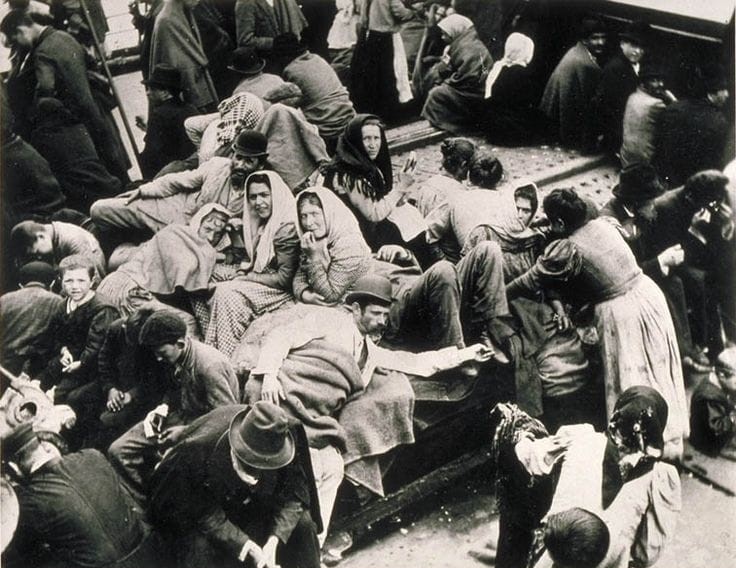
Across the globe, the current political landscape is marred by anti-immigrant backlash, with nativist and populist movements weaponising the fear of cultural dilution, positioning nationalistic identity as a frontrunner to argue against immigration and label it as cultural theft. Throughout history, this voice has been channelised through a multitude of platforms, with political parties using this as a policy goal to introduce anti-immigration measures and treat immigration as a proxy issue, less about labour markets and economics but more about identity and power.
Take, for example, the USA, wherein the Know Nothing party in the late nineteenth century capitalised on rising immigration from Ireland by labelling them as politically dangerous, culturally incompatible and an outlying group of people. This was a tactical advantage, using the anti-immigrant rhetoric to consolidate a voting bloc that was already up in arms about the rising wage competition and the threat it posed for the Protestants. What we see today are modern iterations of the continued attempt to leverage concerns of cultural preservation and protection to depict immigration in a negative light. Benedict Anderson reminds us of this in his commentary on the ideas of modern nationalistic boundaries and how nations are not static entities but ‘imagined communities’, shaped by those who inhabit them. The idea of preserving one’s country by limiting its borders is not just absurd but akin to asking if the chai at Kyaani & Co. would be worth your penny.
The Legend of Sugar in the Milk
The Parsis have provided us with a masterclass in cultural diplomacy, teaching more than just 100 ways to cook eggs and potatoes, reminding us why cultural assimilation is the intangible thread that shapes communities in the long run. Fleeing religious persecution following the Arab conquest in Iran, the small group of Zoroastrian traders that arrived on the shores of Gujarat, sweetly integrating into the ‘milk’ that India offered, was a silent but reaffirming metaphor of what cultural assimilation means. It wasn’t an invasion, but a slow churning, continuous negotiation of identity and survival, shaping up in the quiet chasm of time. The Parsis adopted Gujarati as their language, modified their food, laid down their weapons and managed to prevent the complete erasure of where they came from. What modern-day illusion of ‘immigrant threat’ fails to realise is that this very idea, the belief that immigration will erode nationalistic culture and drain economies, is self-fulfilling in itself. Accounting for the USA, for example, perception itself is a driving force for uninformed choices, where data tells us that natives perceive the immigrant share of the population to be a massive 36%, as opposed to the meagre 10% that actually exists. Borrowing from the UK’s Brexit experience, we saw this play out in reality when the post-referendum results showed that zones with high non-UK-born populations had a statistically greater share of votes for ‘leave’. In fact, this correlation was even more amusing when it was observed that the lowest ‘leave’ votes were from university areas and places wherenon-UK-bornn populations were in the majority. This demographic analysis by the Guardian wasn’t just about perception but a tangible reminder of how media-propagated ideas and a latent identity threat can push people to ignore statistical realities and pursue decisions on the basis of group heuristics. Further, in the spirit of quantifying the narrative, Alesina et al. (2022) assembled 2400 participants to study natives’ perceptions about immigrants in 6 developed countries, highlighting the striking misconceptions that one can deduce. It was found that the native occupants think of immigrants as less educated and poorer than they actually are, overestimating how much net burden is imposed on the receiving countries. Aligning with the ‘echo chamber’ type of mechanism proposed by Sunstein (2018), people with unvalidated opinions often refuse to seek verified data and continue to engage the false belief, thus creating a false narrative that eventually amplifies.
As can be inferred from India’s own experience with the Parsis immigrating into the western flank of the country, the net gains from hosting new communities in one’s land are far greater than denying them entry. Throughout British rule and the early years of Independence, the Parsis remained significant holders of wealth, despite their disproportionate population of only 61,000 people currently (World Population Review, 2026). The financed mercantile established itself as moneylenders and utilised strong networks to become commercial agents of the English and Dutch East India Companies. As reaffirmed by Tabellini (2020), immigration has historically proven to have a positive, meaningful impact on natives’ employment, even for those in the lower end of the income distribution. They confirm that prolonged intergroup interaction fosters ‘horizontal culture transmissions’ which, over the long term, lead to civic enrichment and stronger preferences for social welfare, as observed in India’s case with Parsis.
Lagan Nu Custard might look like a simple dish, but it has its own tale to narrate, picking up Goan influences to appease the spice-accustomed palate of the Persians. It wasn’t about changing what they stood for, but opening up to what they could be. Immigration doesn’t need to mask itself in the guise of stolen opportunities, but what if it meant just adding another colour to the tapestry that already exists?
The Socio-Cultural Imperative
Parsi cuisine is a culinary symphony of its own, an assortment of every culture it has interacted with, moulding itself from Dutch influences to British and Gujarati touches, yet retaining its core like a well-rounded Dhansak. If their food is a testament to their role in India’s cultural weave, ‘khattu-mithu’ (sweet and sour) aptly describes how they have merged with India, birthing something spectacular from what was affordable and practically feasible.
While an interesting observation by Robert Putnam analyses that in the short-run, higher ethnic diversity does in fact lead to temporarily lower levels of trust, but eventually people do end up interacting more and developing shared norms. The deduction seems to prove that ethnic diversity, in the long run, has far more returns by way of social development, than the initial jerks in the social attitudes of people. These initial tremors are not a result of hostility, but of uncertainty and lack of familiarity when social diversity is at its tipping point, almost as if stretching a rubber band until it gets accustomed to its new state of rest. Institutional integration, at its core, needs cultural hybridity and variation, without which it turns into a closed-off bubble. Enhanced social capital through actual, long-term immigration directly refutes the idea of an anti-immigrant political agenda. In fact, the USA has been a witness to the fact that long-run exposure to Arab-Muslim immigrants actively lowers native prejudices, just as it significantly reduced support for Trump’s 2017 ‘Muslim Ban’.
The Parsi experience through time and wars verifies the idea of the ‘contact hypothesis’, effectively displaying how prolonged trust built via economic and cultural interactions reduces unfamiliarity and forges group identities. When such interactions increase, negative stereotypes fade, empathy increases, and local support for anti-immigrant parties declines on its own.
Conclusion
Food is about sustenance, but for the Parsis, it was a symbol of where they came from and also where they belonged to. A celebration of their roots, the Parsi thali, referred to as ‘bhonu’ is a welcoming and heart feast that encompasses sweet, salty, sour and tangy flavours, culminating into a celebration of gastronomy. Maybe this isn’t about food, and maybe it is; that is for us to learn and decipher. With that, take a moment, sit back and allow yourself to take a sip of Palloonji’s. It may remind you of the Parsis, or it may remind you of what they stood for; either way, it would be all worth it.
References:
- Antia, K. (2020, March 20). History of the Parsi Migration to India.
- Buck, J. (2016). ‘The World’s best Minority’: Parsis and Hindutva’s ethnic nationalism in India. Research School of Humanities and the Arts.
- Billimoria, R. (2022, November). A Unique Odyssey of Parsi Cuisine: from Persia to Mumbai. International Journal of Advanced Research in Science, Communication and Technology.
- Alesina, A., & Tabellini, M. (2022, May). The political effects of immigration: Culture or economics?
- Bhugra, D., & Becker, M. A. (2005). Migration, cultural bereavement and cultural identity. World Psychiatry, 4(1), 18–24. https://pmc.ncbi.nlm.nih.gov/articles/PMC1414713/
- Maurya, H. (2002). The role of Parsis in the growth of the urban economy in the south Gujarat region during the nineteenth century. Proceedings of the Indian History Congress, 63, 508–520. http://www.jstor.org/stable/44158119
- Patel, M. (2022, November 13). Bun maska and berry pulao: The history of Mumbai’s Irani cafés. The Indian Express. https://indianexpress.com/article/research/a-feast-of-berry-pulao-how-the-irani-cafes-of-bombay-served-as-socio-economic-levelers-8263822/
- American Civil Liberties Union. (2024, October 17). Trump on immigration. American Civil Liberties Union. https://www.aclu.org/trump-on-immigration
- Ackrill, R. (2017, May 26). How areas with low immigration voted mainly for Brexit. SBS News.https://www.sbs.com.au/news/dateline/article/how-areas-with-low-immigration-voted-mainly-for-brexit/0uarwktx9
- World Population Review. (2026). Zoroastrian population by country 2026. World PopulationReview.https://worldpopulationreview.com/country-rankings/zoroastrian-population-by-country
