
We don’t read and write poetry because it’s cute. We read and write poetry because we are members of the human race. And the human race is filled with passion. -John Keating, Dead Poets Society.
Somewhere in the last few years, we decided passion wasn’t “efficient” enough. We started asking what art is “for”, what philosophy “produces”, or what a poem is worth on a résumé. We built machines that could write, paint, and compose faster than we ever could and ever will, but never stopped to ask whether being replaceable was ever the point of being human. And there’s no place this obsession with over-efficiency is more visible than in the market.
The Race for Optimisation and the Nash Equilibrium
Imagine a market where every product looks identical, every advertisement reads the same, and every pricing strategy reflects its rival’s to the exact penny. This is not a dystopian, sci-fi premise; it is the predictable outcome of our current AI gold rush. In economics, this state of perfect, unyielding gridlock is known as Nash equilibrium -a situation in which no participant can improve their position by changing their strategy alone, given the strategies everyone else is following. Company A adopts AI because it lowers costs. Company B follows because refusing to do so would leave it at a disadvantage. Soon, everyone has adopted the same advantage, and the technology that was supposed to differentiate firms becomes the minimum requirement for competing at all. Everyone in the market follows the same algorithm, the same procedure, and the same system. It’s impossible for any CEO to “think for oneself”. Moving first means moving alone, and moving alone, in this market, means losing. The result is not necessarily a perfect Nash equilibrium, but a powerful pressure toward one: everyone is locked into the same optimisation game because no firm can escape it alone.
The Human Why
As machines automate logic, optimise efficiency, and calculate probability, they inadvertently create a world of resemblance and monotony. After all, the machine did end up completing man’s tasks. But at what cost? At the cost of man himself. The algorithms can tell us what happened and how to react, but they are entirely blind to the most fundamental question: the human why. They are far less capable of answering the deeper question of why something matters to us. An algorithm can model churn; it can optimise a retention strategy down to the decimal point. But what it can not model is desire -the reason the product mattered before it became a data point, because desire was never a pattern in past data. It is something lived, felt, and interpreted by human beings.
This is where the humanities become more than a sentimental defence of subjects that happen not to be easily measured. Philosophy, literature, history, and the arts train people to question the assumptions beneath a problem rather than to simply optimise the problem they have been given. AI can be exceptionally powerful at answering “How do we do this better?” The humanities force us to ask, “Should we be doing this at all?”
To break out of this algorithmic stalemate, businesses do not need faster code or larger data sets. They need the very thing the machines can not calculate: the humanities. Philosophy, literature, history, and the arts are no longer just academic pursuits without job prospects; they are the ultimate competitive advantages. This is not a sentimental gesture; rather, it is a way out of the convergence optimisation creates. When identical algorithms process identical data, parity is inevitable. The real edge belongs to the firm that brings human intuition into the mix and asks the questions machines were never built to consider.
Literature teaches us to inhabit minds unlike our own. History teaches us that the present is not inevitable. Philosophy teaches us to question the assumptions hidden within our questions. Art teaches us to create and recognise value that cannot always be reduced to utility. In a world increasingly designed to optimise what already exists, these capacities make room for something truly different.
When Measurement Replaces Meaning
If the first cost of this race is strategic, the second is cultural. When survival itself depends on optimisation, culture stops becoming something a society creates and thrives on, but becomes something it can no longer afford. Nobody needs to stop a kid from picking up an instrument just because they like the sound of it; the system does something quieter: it simply does not reward it. Nobody tells a child to stop writing stories or poems; the reward simply goes elsewhere, and over time, that’s enough. People drift toward what gets awarded and away from what doesn’t, without ever deciding to.
This situation, in economic terms, is called Goodhart’s law – “when a measure becomes a target, it ceases to be a good measure.” Grades were supposed to show that someone had learned. Instead, getting the grade became the whole point, and the learning eventually stopped mattering. In the same way, productivity was supposed to show that a life was being well spent, but once it became the goal, the life and human effort put underneath it stopped counting. This is now happening to ambition itself. We’ve learned to ask if something counts before we ask if it’s worth doing. The question of whether something is meaningful is increasingly replaced by the question of whether it is measurable. Eventually, the first question stops occurring to us at all.
This is how a culture loses its humanities. Not because poetry or philosophy ever needed permission to matter, but because a system that rewards the measurable eventually convinces people that only the measurable is real and necessary. AI accelerates this tendency. The faster AI can think, write, calculate, and optimise on our behalf, the more tempting it becomes to outsource not only our tasks, but our judgment itself. Goodhart’s Law warns us exactly about this: when a measure becomes the target, it stops being a good measure. Social media proved it first. Platforms optimised for “engagement” as a proxy for value, until engagement and value quietly stopped meaning the same thing. Internal Meta research made public in 2021 showed the company knew Instagram worsened body image and anxiety in teenage girls, and kept optimising anyway. No one made a single deliberately harmful choice; the trap did the damage on its own.
AI raises the stakes by delegating judgment itself, not merely the labour. In 2023, two New York lawyers filed a legal brief in Mata v. Avianca built on court cases ChatGPT had invented entirely: never checked, never questioned. The tool had not just drafted their argument; it had replaced the one skill a lawyer is trained to exercise: judgment about what is true. That’s not a shortcut to efficiency; it’s the first sign of a society forgetting how to check its own work.
A Human Life is Not an Algorithm
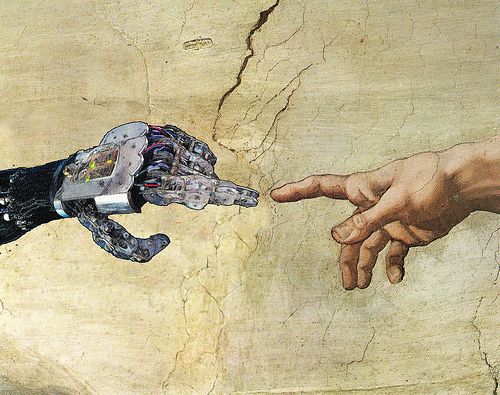
A world in which AI does all the thinking for us is not a utopia; it is something far stranger: a hyper-efficient, high-tech prison in which everything works perfectly but nobody remembers why they wanted it to. With the excessive reliance on AI, we could have more productivity, more optimisation, and more convenience than any generation before us. But what we end up losing is far more valuable: our capacity to think, feel, and decide what any of it is for.
And this is where the two problems converge. The Nash equilibrium is what happens when businesses optimise themselves into sameness. Goodhart’s law is what happens when societies optimise their values into numbers. But the greater danger is what happens when that logic reaches the individual. With AI increasingly doing our thinking and calculating our choices, human beings begin optimising themselves until they forget that they were never machines to begin with. This is no longer a hypothetical. In September 2026, Jacob Coxon, a pretraining researcher who had worked at both OpenAI and Anthropic, resigned and stated plainly that neither company was acting responsibly – that they were “racing straight to self-improving super-intelligence and gambling with our lives.” Anthropic’s own alignment science lead publicly agreed, estimating a greater than ten percent chance that advanced AI could cause human extinction within a decade, and admitting the company had no complete plan to prevent it. Here is the Nash equilibrium made visible: the people closest to the danger say, on the record, that they cannot stop, because stopping first means losing to whoever doesn’t.
The humanities offer an escape from all of this. At the level of business, they provide something increasingly difficult to automate, standardise, or calculate: judgement, imagination, interpretation, and the ability to see a problem differently. The World Economic Forum’s Future of Jobs Report has repeatedly ranked analytical and creative thinking above technical skill as the capability employers expect to matter most in the coming years, as proof that even the market, which built this race, quietly knows what it cannot win without.
But there is a deeper reason the humanities matter so much, especially in the age of automation. If we defend literature, philosophy, or art only because they make businesses more innovative or workers more productive, we have simply absorbed the logic we were trying to escape. We have turned the humanities into another metric, another instrument of optimisation, another thing that must prove its usefulness before it is allowed to exist. Their greatest value may therefore be precisely what cannot be measured. A painting does not need to outperform an algorithm to be worth making, and philosophy does not need an immediate return on investment to teach us how to think. These things remind us that human value does not begin and end with utility.
What Can't Be Automated
Value isn’t only what can be measured or optimised. Some things are worth doing simply because they come from passion.
The Nash equilibrium explains why no company can be the first to slow down. Goodhart’s law explains why entire societies mistake the measurable for the meaningful. But neither explains why any of this should worry us personally, and that is exactly the point. The trap was never designed to be noticed. It works precisely because it feels like progress the whole way through. The humanities are not a rejection of that progress. They are the only thing standing between progress and purpose. They remind us that not everything worth doing needs to be useful, measurable, or optimised, and that some things are worth doing simply because they are born from passion, and passion has never once needed to justify itself with a metric.
We do not read and write poetry because it is efficient. We do it because we are human, and the human race is filled with passion. If we forget that, if we let the machines do the wondering as well as the working, we will not have built a smarter civilisation. We will have built a very well-optimised one, and quietly forgotten what it was for in the first place.