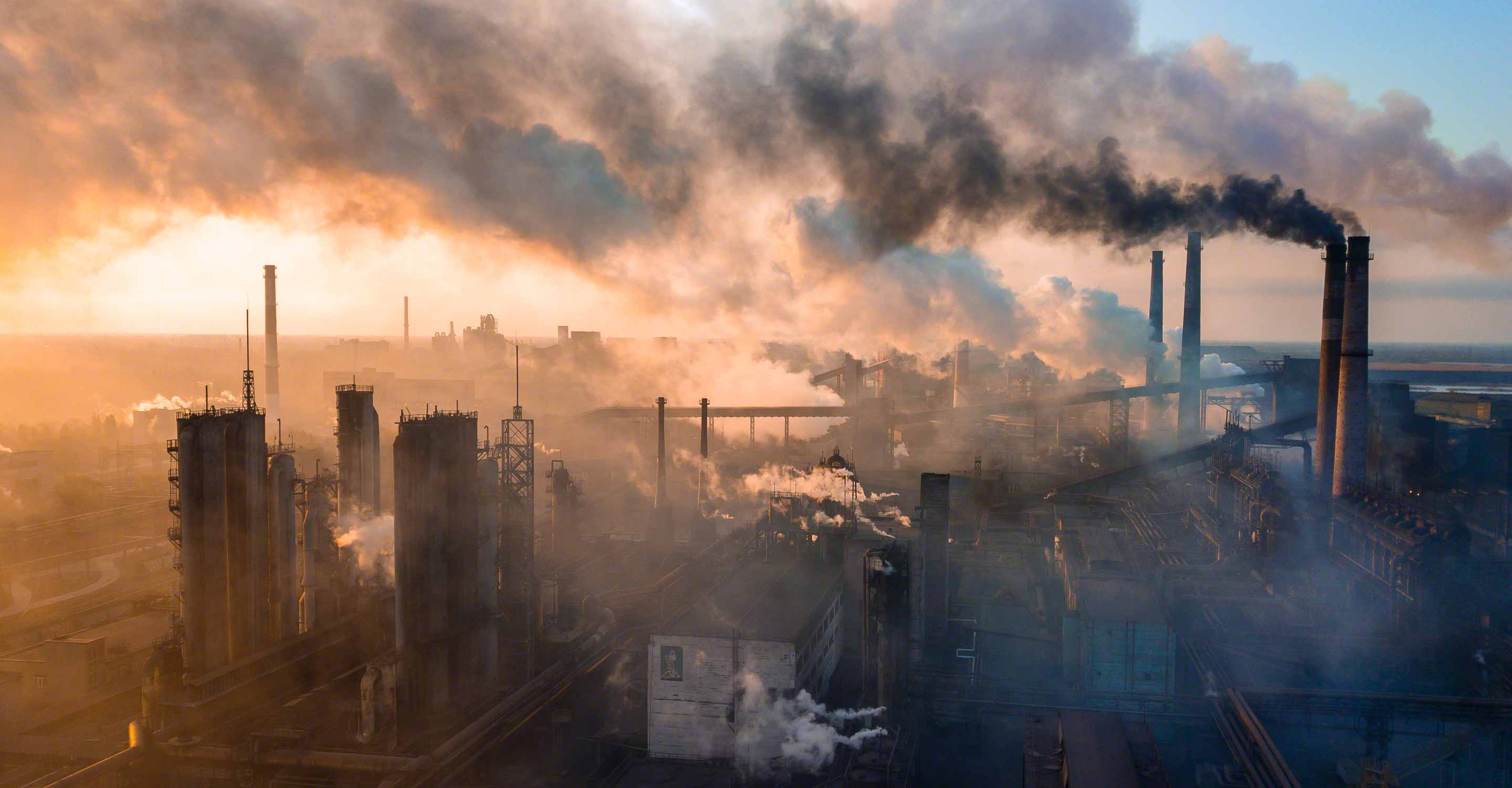

At 7 AM, a construction worker in Delhi checks his phone. The air outside is hazardous, but the bigger question is whether he can afford to stay home. Gita Gopinath, former IMF Chief Economist, noted at the World Economic Forum in Davos that “pollution is a challenge in India,” and its economic impact is “far more consequential than any impact of any tariffs” (World Economic Forum, 2026). The construction worker’s dilemma, therefore, is not an isolated one. It reflects a broader question: when pollution threatens both livelihoods and economic activity, who ultimately bears the cost of cleaning the air?
The onset of October has once again brought a gradual deterioration in Delhi’s air quality. Instead of waiting until the air quality index (AQI) becomes hazardous, authorities have taken preventive steps to reduce emissions before winter smog hits its worst. The full ban on construction and demolition operations is planned from December 10 to January 20. These measures form part of the Graded Response Action Plan (GRAP). It is a set of emergency measures taken to prevent further deterioration of air quality after the AQI of the Delhi-NCR region reaches a certain threshold (Commission for Air Quality Management [CAQM], n.d.).
The Problem of Misallocated Cost
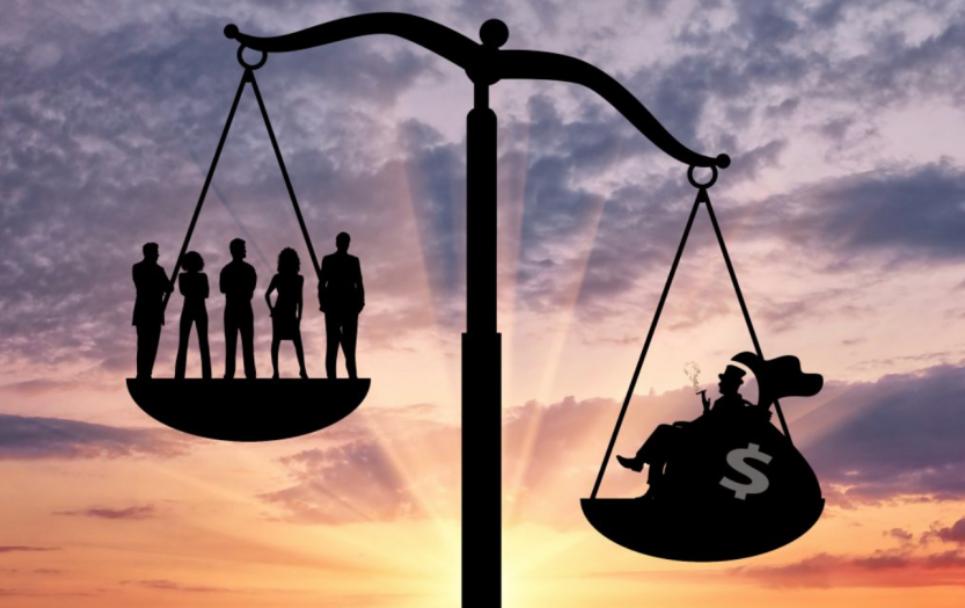
Air pollution is a negative externality because firms that pollute do not necessarily bear all the health and environmental costs of their pollution. A negative externality occurs when someone’s activity creates a cost for other people, but the person carrying out that activity doesn’t fully pay for that cost. Let’s consider construction activities in Delhi.
- A construction company generates dust and emissions.
- The company may not bear the full cost of the resulting pollution.
- Residents experience health problems, while the government may impose restrictions when air quality deteriorates.
- Construction workers may lose their daily wages when work is suspended.
The cost of pollution is therefore spread across different people, including those who did not cause it. That is the misallocation: the polluter does not necessarily bear the full cost, and other people end up paying part of the price. This creates an important policy challenge. Pollution control should not simply shift the cost of environmental protection onto people with the fewest alternatives.
The Limits of Emergency Restrictions
The GRAP allows the authorities to introduce restrictions when air quality is getting worse. The main advantage of this method is that it is quick, since urgent actions need to be taken when prolonged exposure to the polluted air becomes hazardous to health.
Yet emergency measures focus on the immediate effects of pollution rather than encouraging changes in behaviour. Construction workers suffer a loss of income when their site is closed, and transporters are affected since movement of vehicles is restricted. These actions have no impact on the decisions concerning the level of emissions generated by projects and fleets. Although restrictions may be necessary during severe air pollution, they cannot replace fundamental reform, since fundamental reform means incentives encourage clean behaviour before the critical point arrives.
The reliance Delhi has on the GRAP policy highlights the limitations of this policy as a long-term solution. Measures such as construction and vehicle restrictions reduce exposure during severe pollution conditions; they also disrupt economic activity. Another highly polluted city offers a useful contrast: Beijing. It has a sustained pollution control strategy combining industrial regulation, cleaner energy and vehicle-emission controls, which contributes to a decrease in the pollution level in Beijing. Beijing follows more coordinated governance and clearer accountability, which also allows pollution control to operate as a continuous policy rather than primarily as an emergency response. For Delhi, the lesson is not to replicate Beijing’s model directly, but to move from repeated short-term restrictions towards year-round emission reduction.
Can Markets Contribute To Cleaning The Air?
We often treat air pollution as an issue that requires government intervention and restrictions. But what happens if we make pollution expensive enough that businesses choose to pollute less? This introduces the principle of market-based environmental regulation. Market-based environmental regulation uses economic incentives and price signals such as pollution taxes, cap-and-trade permits, and subsidies to motivate businesses to cut emissions.
A notable example in this case is from Surat, Gujarat, where a project was conducted in which companies were allowed to trade their pollution permits to emit within a certain cap. It was discovered that the emission levels of particulate matter had fallen by about 20%–30%, while the cost of pollution control had decreased by 11%. The rate of compliance was also high, at 99% versus 66% under the current system (Greenstone et al., 2025). This shows that putting a price on pollution can help reduce emissions while making pollution control less expensive.
But more importantly, the question arises: why can’t Delhi adopt the same model?
The answer lies in the nature of Delhi’s pollution. While emissions trading for Gujarat focused on specific industrial polluters, those that contribute to Delhi’s air pollution include a range of sources from transportation, construction, industries, and open burning of waste and stubble, among others in other states. For example, the act of stubble burning illustrates how pollution depends not just on punitive measures but also on economic limitations. Farmers will continue burning their crop stubble if the machines needed for alternative solutions are simply out of reach due to financial reasons. Clearly, this indicates that an isolated market mechanism for pollution control in Delhi will not suffice. Instead, it needs a combination of emissions-based regulation, financial incentives for cleaner alternatives and coordination with neighbouring states to address pollution at its source.
Designing a Fairer Policy
A pollution control strategy should be able to draw a distinction between immediate and long-term solutions to pollution. In the immediate sense, GRAP prevents high levels of pollution from worsening by imposing restrictions on various polluting activities like vehicle usage and even construction work in certain places. But the restrictions that it imposes also come at an economic cost. GRAP is more about managing the effects of poor air quality but fails to solve any of the structural causes of pollution. The restrictions in themselves do not stop reliance on pollution-causing transport; industrial pollution continues, and farmers still burn agricultural residue due to lack of alternatives. It is important for Delhi to transcend the phase of implementing short-term bans to adopting policies that ensure a sustainable decrease in emissions. It is necessary for Delhi to invest in technologies that do not pollute the environment, provide affordable options to farmers and industrialists, monitor emissions and coordinate efforts with neighbouring states. It should concentrate on preventing rather than managing pollution.
At the same time, pollution control policies should avoid placing a disproportionate burden on workers and farmers who have fewer alternatives. When construction activity is restricted, daily-wage workers should be protected through temporary income support or compensation for their lost working days instead of being left without any income, which is currently what is happening. Transport workers and small operators can be supported through incentives to shift towards cleaner vehicles and be provided with more affordable access to cleaner fuels.
Conclusion
The air pollution problem in Delhi is not merely an environmental issue but also one relating to economic responsibility, and immediate safeguards can be achieved via emergency regulations, incentive schemes based on market systems, and aid through targeted assistance.
The costs involved in controlling pollution must consider both the degree of responsibility for the pollution and the ability of the various individuals to make changes; a good strategy ought to reduce the attractiveness of pollution and increase access to clean alternatives.
References
- World Economic Forum. (2026, January 22). India at Davos 2026: Growth is no longer the question. World Economic Forum article
- The Graded Response Action Plan (GRAP) of the Commission for Air Quality Management. https://caqm.nic.in/
- Greenstone, M., Pande, R., Ryan, N., and A. Sudarshan (2025), ‘Can pollution markets work in developing countries? Experimental evidence from India’, The Quarterly Journal of Economics, https://doi.org/10.1093/qje/qjaf009.
- Mangaraj, P., Matsumi, Y., Nakayama, T., Biswal, A., Yamaji, K., Araki, H., Yasutomi, N., Takigawa, M., Patra, P. K., Hayashida, S., Sharma, A., Dimri, A. P., Dhaka, S. K., Bhatti, M. S., Kajino, M., Mor, S., Khaiwal, R., Bhardwaj, S., Vazhathara, V. J., … Mor, S. (2025). Weak coupling of observed surface PM2.5 in Delhi-NCR with rice crop residue burning in Punjab and Haryana. npj Climate and Atmospheric Science, 8, Article 18. https://doi.org/10.1038/s41612-025-00901-8
- Press Information Bureau, Government of India. (18 March 2025). Stubble burning. Ministry of Agriculture & Farmers Welfare. https://www.pib.gov.in/PressReleasePage.aspx?PRID=2112397
- Commission for Air Quality Management in the National Capital Region and Adjacent Areas (Amendment of the Rules relating to the Imposition, Collection and Use of Environmental Compensation for Stubble Burning), 2024, issued by the Ministry of Environment, Forest and Climate Change. Press Information Bureau, Government of India. https://www.pib.gov.in/PressReleaseDetailm.aspx?PRID=2071574
- Greenstone, M., Pande, R., Ryan, N., & Sudarshan, A. (2025). Can pollution markets work in developing countries? Experimental evidence from India. The Quarterly Journal of Economics, 140(2), 1003–1060. OUP Academic