

It feels like anything today can be contrasted with the economic state of the past, focusing on how everything was “more affordable” and “reasonable” – movie tickets cost ₹20, rice was ₹12 per kg, and there were houses affordable to purchase on one salary. This is an appealing argument because the numbers look different. Nevertheless, a price by itself tells very little about its affordability. ₹20 has a different value for someone earning ₹2,000 a month and someone earning ₹80,000. The same issue appears when contrasting whole periods. When someone says “things were cheaper before,” they may have a legitimate argument, but they may also compare nominal prices without accounting for income, purchasing power, or the need to spend it elsewhere. That is where the concept of rosy retrospection comes in handy: not to prove memories aren’t true, but to analyse what they leave out.
“Rosy retrospection” is what psychologists Terence Mitchell, Leigh Thompson, Erika Peterson, and Randy Cronk called a phenomenon wherein people viewed significant experiences more favourably in hindsight than when they did while going through them. In all experiments related to a European vacation, Thanksgiving, and a bicycle ride, the subjects’ recollection was more favourable than their descriptions of the experience at the time it happened. This phenomenon should not be confused with nostalgia. A key difference is that nostalgia is the emotional desire for something of the past, whereas Rosy retrospection refers to the discrepancy between an experience and the memory of that experience.
This can be seen in the way we, as consumers, remember the economy.“I miss how things were when I was younger” is not the same as saying “people were better off economically then.” The former does not require disproof mainly due to its subjectivity, while the latter must be examined due to the need to clarify when, where, and according to what measure people were better off economically.
This distinction raises a very important question: “Were things truly more affordable in the past simply because they were cheaper?”To answer this question, we need to establish a fundamental difference between the nominal price of items and their affordability. Nominal price is simply the figure that appears on the price tag, whereas affordability is measured in light of the availability of the resources of the individual purchasing the item. Assume that the price of a movie ticket increases from ₹20 to ₹400, while income per month has increased from ₹2,000 to ₹80,000. This implies that before the salary increase, 1% of the total income was being used, and after the salary increase, the share of the movie ticket has fallen to 0.5%. Thus, when we compare the price and affordability of the movie ticket separately, we arrive at different conclusions. In real comparisons, economists adjust for the rate of inflation and take into consideration concepts such as real income, income-price ratio, work-time cost, and household expenditure share.
But just taking inflation into account does not necessarily mean that the past is better simply in people’s imagination. There really has been some deterioration in economic access to certain assets. Housing provides one example of this because a house is an item for consumption, an asset, and it is also highly leveraged. According to the Office for National Statistics, the median price of a house in England in 2024 amounted to £290,000, or 7.7 times the median annual earnings for full-time employees. This gives some economic backing to the idea that the housing market was relatively more affordable in the past.
Even the house price-to-income ratio falls short of a justification. Purchasing a house includes various additional complications (the down payment, the mortgage interest rate, the tax, the maintenance, and even the risk involved in being in debt). Two similar families purchasing a house at the same price of ₹50 lakhs would be in different situations depending on the mortgage interest rate. This shows us that the housing situation was much more complex at the time and can not be fully encapsulated by saying “housing was more affordable back then”.
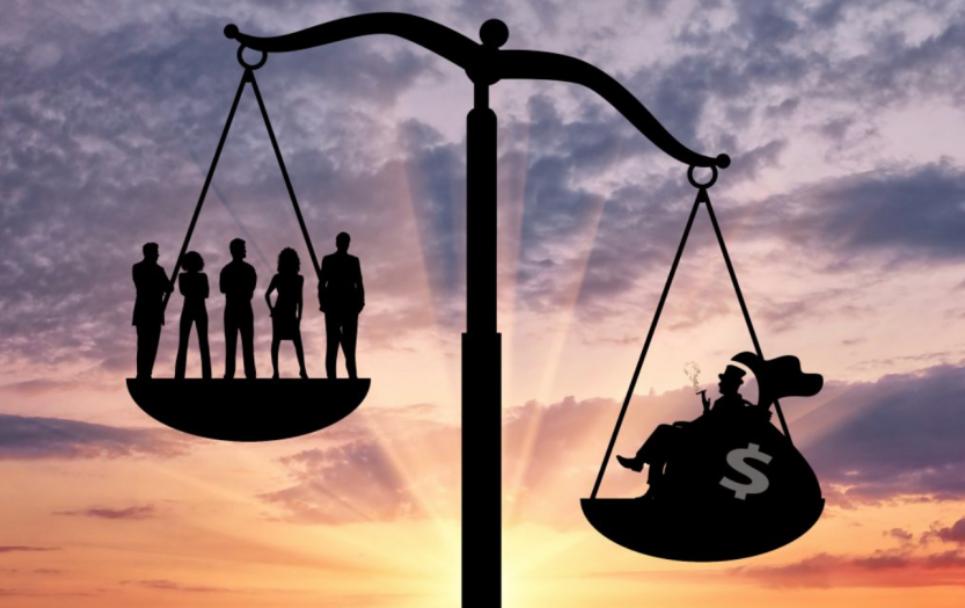
The broader issue with saying that “the economy was better” is that such a thing does not really exist. There is no single economic issue that is the same for everyone; economic changes affect people differently according to their level of income, their expenditure, the country they reside in, and much more. For example, two individuals can both face the same increase in property prices; the homeowner will receive benefits in the form of growing equity, and the renter will need to find extra cash for a down payment and pay higher rent prices. An increase in average income may coexist with no growth of the median household income level, and an increase in GDP may be coupled with job cuts in a specific town. Therefore, looking at a single economic indicator or a group of people cannot describe the state of an economy.
This is not the whole story, though. The past was not merely a “more affordable” version of the present. The simplicity of certain aspects of the past involved scarcity, limited choices, and inferiority of goods. The Indian economy before economic reforms is a relevant case study for illustrating the argument above. According to an IMF study in 1990, only 12% of the manufactured products could be imported under an open general license, while the average tariff rate exceeded 90 %. Consumers may have felt nostalgic for certain brands, or had lower consumption expectations, or been in less crowded markets, and, hence, feel that life in the past was simpler. However, fewer goods do not necessarily mean more welfare, but a limitation of choices and competition. Liberalisation increased the competition and subsequently the amount and variety of products available, but this did not automatically lead to an improvement in other aspects. The availability of various goods, therefore, does not correlate to welfare, as choice, affordability, quality, and access also matter.
This is what creates the paradox of economic perception: why can people live in a technologically advanced economy and still feel they are lagging? Well, because average advancement and affordability are not the same things. A phone from today would have much higher computational, communicational, and informational capabilities than the phones that people used back in the day. However, it will not assist young professionals in saving money for buying an apartment. A modern economy can make electronics cheaper and land more expensive in relation to income in the desired city. A modern economy can increase the average productivity while putting more financial risk on people themselves. The health statistics illustrate the deceptive nature of one economic indicator quite well: the World Bank shows India’s life expectancy in 1990 being equal to about 58.6 years, while it is 72 in 2023. The fact of some improvement cannot negate the fact of some problems somewhere else. Oddly enough, the same attachment to the past can become a valuable resource in economic terms. Rosy retrospection influences not only the way consumers remember products but, under certain conditions, their willingness to pay for them.
In six experiments, researchers Lasaleta, Sedikides, and Vohs discovered that the induction of nostalgia decreased the psychological value participants associated with money and increased their willingness to pay for products in one of the experiments; the researchers attributed the results of the study to the feeling of social connectedness. The more recent studies warn against the conclusion that nostalgia always leads to increased consumption: its influence is dependent on social context and the product or consumer concerned. It contributes to the explanation of why the demand for vinyl records, retro video games, vintage clothing, and reissues of goods exists. Companies sell not just old products but also familiarity and identity connected to the past.
Thus, when considering rosy retrospection, what perhaps is the best way to approach it is not to ask whether the past really was good or if it is remembered incorrectly. The two are entirely possible at once. A person may really have been entering the housing market in better conditions than current conditions, while also choosing to recall the inconvenience and/or lack of something in that era. An individual today may have extraordinary consumer technologies at his disposal but is followed by a very hard time becoming a homeowner. This is where we are led to economic questions that are rather uncomfortable to answer: Who is it better for? And better in what respect? The point of economics here becomes rather precise: good on which margin, for whom? With nostalgia being tested in light of real prices, real incomes, financing costs, quality, and risk, the “golden era” becomes a mixture of advantages and disadvantages. Perhaps the past was not all bad, and perhaps it wasn’t all that great either, or maybe we’re all just focusing on different parts of a bigger picture.
The sky may look pink when one looks at the past through rose coloured glasses, but perhaps this tinge is not in the sky but rather in the way we perceive and remember the economics of the past.
References
- Lasaleta, Jannine D., Constantine Sedikides, and Kathleen D. Vohs. “Nostalgia Weakens the Desire for Money.” Journal of Consumer Research, vol. 41, no. 3, 2014, pp. 713–729.
- Mitchell, Terence R., et al. “Temporal Adjustments in the Evaluation of Events: The ‘Rosy View.’” Journal of Experimental Social Psychology, vol. 33, no. 4, 1997, pp. 421–448.
- Office for National Statistics. “Housing Affordability in England and Wales: 2024.” Office for National Statistics, 2025.
- Reserve Bank of India. “Housing Affordability.” Reserve Bank of India Bulletin, 2017.
- U.S. Bureau of Labor Statistics. “Changes in Access to Retirement Benefits, 2010–23.” The Economics Daily, 29 Aug. 2024.
- World Bank. “Life Expectancy at Birth, Total (Years) – India.” World Development Indicators, World Bank.
- Cerra, Valerie, and Sweta Chaman Saxena. “Trade Liberalization and Firm Productivity.” IMF Working Paper, no. 04/28, International Monetary Fund, 2004.