
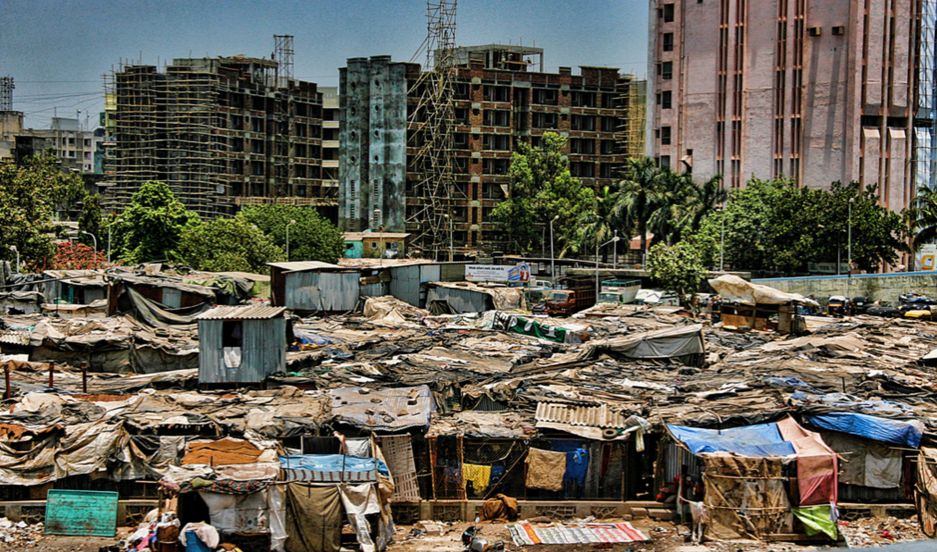

Throughout the evolution of the human race, we have found ourselves repeatedly confronted by paradoxes. We build walls to protect ourselves, only to find confinement within them. We pursue certainty, only to discover meaningful clarity in its absence. We seek progress, only to find that the very systems built to achieve it can resist change. The growing economic systems of the modern world add another entry to this canon: the strange persistence of poverty in a world increasingly equipped to eliminate it
This persistence, on the face of it, is an almost deceptively simple proposition. If poverty persists, then surely there must be forces keeping people within it. It would thus follow that the solutions for poverty should be equally simple in theory: identify the forces, remove them, and the path out should become clear; A conclusion that promises equally straightforward solutions. Yet the plight of the poor has a tendency to resist such neat explanations. The further we look, the more poverty’s alluring simplicity begins to unravel.
There’s something strange about being offered money and deciding that it isn’t worth taking. When we look at Kaivan Munshi and Mark Rosenzweig’s Networks and Misallocation study of 2016, we see this picture painted. Across 119,000 rural households, spanning 242 villages, the very workers who stand to gain from migrating to the city end up living a reality that makes it less desirable to leave their villages. This was not on account of homesickness. One would credulously accept that households facing the greatest risk would be the most willing to leave. Yet this assumption is turned on its head by Munshi and Rosenzweig’s study. Households facing greater rural income risk are actually less likely to have migrant members. The numbers bear this out: a one standard deviation decrease in income risk was associated with roughly twice the migration rate, while a one standard deviation increase in a household’s own income increased migration by about 10 percent.
And what are they missing out on? Imbert and Papp’s 2020 study, Costs and Benefits of Rural-Urban Migration, found that seasonal migrants earn 35% higher wages daily in the city than they do on local public works in their villages. The financial incentive to migrate seems so obvious. One might then attribute this reluctance to a lack of awareness among those in poverty. The thought is not entirely unfounded. It is hardly surprising that the number of people living in poverty who have encountered the intricacies of the rural-urban wage differential is likely to be rather small. But what if they were made aware of the numerous upsides of living an urban lifestyle?
In 2015, Barnhardt, Field, and Pande studied a housing lottery in Ahmedabad, India that provided slum dwellers with the chance to move into improved housing on the outskirts of the city. Winning the lottery should have, on the surface, been an unmistakable improvement in their circumstances. Yet, a whopping 34% of those who won never ended up moving into their new homes at all. Among those who did, 32% ultimately left. Nearly one in three winners who moved in ultimately chose to leave them.
The lottery can easily be chalked up to the government’s attempt at addressing a distinctly visible problem of poverty: inadequate and inhuman housing. Its premise was straightforward. Better housing offered at little to no cost should mean better living conditions for those who need them most. But this expectation that the change would speak for itself met a rather different reality.
We can now turn to Vaishnavi Tripuraneni and Paul Robbins’ 2024 study, Credit in Agrarian India: Narrative Policy Struggles over Farmer Surplus. Once again, we are presented with a paradoxical premise. Once again, we are presented with a paradoxical premise. ‘Farmers in India continue to borrow from informal lenders, despite decades of state efforts to replace informal lending with formal credit’. For decades, formal credit has been presented as the preliminary means through which India could rid itself of the ‘exploitative informal lender’. It was difficult to fault: If informal credit was the problem, then formal credit should be the solution, and ideally establish an inverse relation with it.
But credit does not exist in isolation from the conditions that create the need for it. A small town farmer does not borrow merely because a particular lender exists. His borrowing has always been entangled with the production of income, the timing of agricultural returns, access to capital, and the distribution of agrarian surplus. Changing the institution through which credit is obtained does not, by itself, change the circumstances that make that credit necessary.
And this is where Tripuraneni and Robbins’ historical examination of Indian credit policy shows why our initial expectation falls short. It shows us how informal and formal credit have developed within the same wider economic system, shaped by the same underlying struggle over agrarian surplus. The state expanded formal credit without resolving the conditions that sustained its demand in the first place. The more curious premise was never the farmer’s choice, but our belief that one form of credit could simply replace another.
Perhaps what makes these choices appear so irrational is the way we have been looking at them. We have treated each decision as though it were a calculation between two alternatives: a higher wage against a lower one, a better house against a worse one, formal credit against its informal counterpart. But the people making these decisions are never choosing between two simplified outcomes. But rather, they are forced to navigate through a set of circumstances that move with one another.
For what may appear to be an economically irrational decision, when each factor is viewed in isolation, can become entirely rational when the circumstances surrounding it are taken into account. Poverty has never lived in isolated variables. It has always lived in interactions between them.
This becomes clearer when we look at Sonalde Desai’s Rethinking Social Safety Nets in a Changing Society. Contrary to its most common definitions, poverty is rarely experienced as simply the absence of income or resources. Households move in and out of poverty, and what determines whether they do so is rarely confined to their income alone.
The difficulty, then, lies in knowing where one circumstance of poverty ends and another begins. A higher wage does not exist separately from the household security lost by pursuing it; a security is found in things as ordinary as a babysitting neighbour, a free haircut or a shop that allows credit. Even a different credit source enters an economy whose other conditions remain largely unchanged.
Hence, the policy implications are more concrete than simply asking policymakers to “consider context.” If rural networks function as insurance, then migration policy can begin by making that insurance portable. Thus in good policy, it becomes vital that the security a household receives from staying should not disappear the moment someone leaves. Housing policy should be judged by more than the dwelling quality at face value, by asking whether relocation preserves access to work, childcare, transport, and other relationships that made everyday life possible. Policymakers need to ask why farmers are taking loans in the first place, before expanding formal credit. Where poverty itself is temporary or recurrent, safety nets must be capable of moving with households through those changes rather than treating poverty as a permanent category.
This changes what it means to “escape” poverty in the first place. Our encounters with poverty in the media or otherwise have accustomed us to imagining poverty as a place from which the ‘poor person’ simply needs to get out: cross a threshold, earn enough, acquire enough, and perhaps even transcend to a ‘slumdog millionaire’. But, as detailed in the evidence we have seen, the boundary between poverty and prosperity is not a line. It is a transition, and transitions can be dangerous.
This is why the choices of the poor can look irrational from a distance. We see the destination clearly because we do not have to make the journey. The higher wage, the better house, the formal loan, the income above the poverty line are all visible. What is harder to see is the uncertainty between here and there.
And as of now, the cost of escaping poverty is having to give up the very things that made survival possible.
References
Barnhardt, S., Field, E., & Pande, R. (2017). Moving to opportunity or isolation? Network effects of a randomised housing lottery in urban India. American Economic Journal: Applied Economics, 9(1), 1–32. https://doi.org/10.1257/app.20150397
Desai, S., Barik, D., Choudhuri, P., Chouhan, B., Sharma, O. P., Tiwari, D. K., & Sharma, S. (2024). Rethinking social safety nets in a changing society (Working Paper No. 171). National Council of Applied Economic Research.
Imbert, C., & Papp, J. (2020). Costs and benefits of rural-urban migration: Evidence from India. Journal of Development Economics, 146, Article 102473. https://doi.org/10.1016/j.jdeveco.2020.102473
Munshi, K., & Rosenzweig, M. (2016). Networks and misallocation: Insurance, migration, and the rural-urban wage gap. American Economic Review, 106(1), 46–98. https://doi.org/10.1257/aer.20131365
Tripuraneni, V., & Robbins, P. (2024). Credit in agrarian India: Narrative policy struggles over farmer surplus. Geoforum, 155, Article 104081. https://doi.org/10.1016/j.geoforum.2024.104081