
Introduction
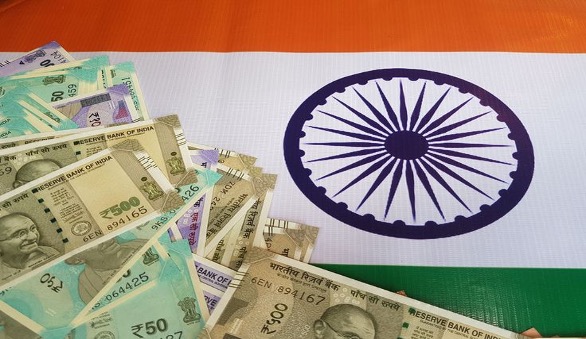
Conventional monetary economics holds a firm sequencing logic, i.e, a currency can only achieve international status after its home economy liberalises the capital account, permitting free cross-border flows of capital. The degree of this is usually subject to mass critique. The US dollar rose to its global ‘reserve currency’ status with credits to its open financial system. The euro was born into one. China’s ‘Yuan Internationalisation project’, for all its planned gradualism, has proceeded alongside necessary incremental capital account opening. India, by contrast, has maintained a deliberately tightly controlled capital account for structural reasons rooted in its conservative economic outlook. The interests stay rooted in avoiding macroeconomic vulnerability and developmental priorities. And yet, particularly since 2022, a historically conservative New Delhi has been seen to pursue a deliberate strategy to expand the rupee’s international footprint. The central question this article addresses is whether this approach can succeed and what it would actually mean for currency internationalisation to be achieved without the following deliberately set (by precedent) degrees of financial openness.
Comparison of the Theoretical Premise
Currency internationalisation refers to the deliberate and strategic popularisation of one’s currency’s use beyond its home jurisdiction, including as a medium of exchange in trade, a unit of account for commodity pricing, and a store of value in the form of foreign reserves. These are symmetrical to the basic functions of Money as a unit value, simply integrated into a global marketing context. Capital account convertibility, by contrast, is a property of a currency’s regulatory regime, i.e., it refers to the freedom of residents and non-residents to convert domestic financial assets into foreign ones without governmental restriction.
Mainstream theory links the two because a currency held abroad has limited utility and thus realised incentives if investors cannot deploy it freely in financial markets. The ability to invest rupee proceeds in Indian bonds, equities, or money markets is what transforms a rupee held in Moscow or Abu Dhabi from a transaction residue into a reserve asset. However, this theoretical linkage assumes that internationalisation is a unitary and binary phenomenon. The historical record is more nuanced. In the UK, Sterling retained residual international use well after the UK imposed significant capital controls in the postwar period. The yuan today operates in offshore markets in Hong Kong and London, while the onshore capital account remains restricted. These precedents suggest that a currency can achieve partial, functional internationalisation limited to specific use cases, corridors, or counterparties, without full convertibility. This relies on secondary or hypothetically alternative primary incentives created deliberately to promote this global adoption, with a completely different model in contrast with the currently free-market-centric ones in practice. India is now testing exactly this hypothesis.
India's Emerging Strategy and Incentives
India’s current approach to rupee internationalisation is governed by selectivity and ideal correctional balance rather than openness. The Reserve Bank of India’s July 2022 circular permitting INR trade settlement established the foundational mechanism. This constituted the establishment of Special Rupee Vostro Accounts (SRVAs), through which foreign banks can hold rupee balances at Indian correspondent banks to facilitate bilateral trade. The idea was to continue centralised control. According to reports by mid-2024, over two dozen countries had activated this mechanism. The diversity correlates with India’s strategic trade links, i.e, Russia, the UAE, Sri Lanka, and several sub-Saharan African economies. The volume of rupee-settled trade with Russia alone rose sharply in 2023, driven primarily by India’s increased imports of discounted Russian crude oil after Western sanctions.
While this may come across as a generalised opening or a commonly practised evasionary mechanism, it is considerably strategic in nature. SRVAs allow rupee use for trade settlement but do not grant broad capital market access. The counterparties are typically state-linked or relationship-managed banks and not open-market participants. This allows regulated usage for users. Users are primarily trading partners with asymmetric relationships to the dollar and a willingness to accept bilateral currency arrangements in exchange for continued access to Indian markets. The entire system banks on variables of attraction to the Indian Markets and the security of RBI’s involvement. It reduces transaction costs for specific corridors, builds rupee liquidity pools in partner jurisdictions, and creates stable demand for rupee-denominated instruments. What it does not achieve is the free convertibility needed for rupees to function as a true reserve asset, a trade-off intrinsic to the path RBI has deliberately chosen to go down.
Geopolitics as an External Driver
The acceleration of India’s rupee strategy after 2022 is not coincidental. In recent geopolitical strifes, there was conscious weaponisation of the US dollar through the SWIFT exclusion of Russian banks and the freezing of Russian central bank reserves in various global markets. This amounted to $300 billion, with the burden falling disproportionately on the non-Western economies, further provoking a systemic reassessment of dollar dependency among them. Strategic vulnerability and self-sufficiency became the primary considerations amid ongoing tensions. This posed an acute dilemma. Dollar dependence is economically rational under normal conditions but strategically vulnerable under geopolitical stress.
India occupies a particularly strategic position in this reconfigured landscape. It is simultaneously a non-aligned actor with growing market power and a country whose trade structure creates natural demand for bilateral settlement alternatives. Apart from the US, India is at a significant trade deficit with almost every major traded economy, but a vast number of moderately sized surpluses from many smaller economies create an arguable counter. This grants a functional scale for a country that cannot compete for internationalisation in markets via production alone, but also fosters an inability to gain traction and grow its share due to limited influence in major economies. This makes trade a much larger incentive for India to apply its internationalisation interests to, and gain benefits out of.
Mechanisms of Selective Internationalisation
India’s partial internationalisation strategy rests on four interlocking mechanisms.
- First, bilateral settlement corridors through SRVAs, already discussed, allow rupee-denominated trade without capital account liberalisation.
- Second, India has begun exploring regional currency clearing arrangements, particularly within the framework of the Indian Ocean Rim Association and as clauses in bilateral agreements with ASEAN members, thus allowing netting of trade flows in local currencies before residual settlement in hard currencies.
- Third, India’s Digital Public Infrastructure, specifically the UPI payment architecture, is being actively extended to cross-border retail and commercial payment corridors. While these flows are currently small in aggregate, the infrastructure establishes a template for rupee-as- payment-medium in high-frequency, low-value transactions.
- Fourth, India is pushing for rupee invoicing in commodity trade, particularly for the import of oil from Russia, and exports of pharmaceuticals, IT services, and agricultural commodities. Commodity invoicing becomes critical because it is at the point of price formation, not just settlement. This creates market traction such that a currency acquires genuine international weight.
Interactions of absolute and weakened mechanisms create a deliberate ecosystem for the rupee to internationalise at a subsidised rate, to the benefit of a regulated and centralised capital structure.
Risks and Structural Constraints
The accumulation of rupee balances in SRVA accounts presents a structural challenge that India has not yet fully resolved. As of early 2024, Indian officials acknowledged that Russia had accumulated substantial rupee holdings exceeding its near-term capacity to deploy through imports from India. This imbalance, which arises from India running a large trade deficit with Russia, creates idle rupee pools that cannot be recycled productively without access to Indian capital markets. This is the initial preempted risk of a strict capital market with free and high incentives. This is essentially comparable to an inflated market of a commodity with free usage, while the production or supply chains of the markets remain highly regulated and inaccessible. While usage remains free on paper, supply chain blocks create either a gap that inflates market prices to unaffordable marks and unrealistic market representations, or pose a potential risk of black markets created in pursuit of exhausting this now free market entity.
The result on the side of the geopolitical scape is a liquidity trap, i.e., partner countries accept rupees but find limited outlets, which over time reduces their incentive to continue rupee settlement. Resolving this requires India to either expand the investment channels available to SRVA holders, implement partial capital account liberalisation, or rapidly increase its exports to surplus-accumulating partners, a structural trade challenge. The former poses a hypocritical quicksand, where a policy avoidant of this liberalisation can only function with a form of posed liberalisation, thus failing its purpose. The latter is highly ideal and is slow in showing results, essentially making it a solution purely on paper. Apart from the structural faults with the same, this disincentivises investors from entering a framework that effectively reaches the same stage, just via a more rigorous path. The latter path is dependent on further pressurising and hence jeopardising the current incentives for opt-in, such as UPI, trade deficits or security. The solution needs to lie outside of this intuitively proposed dichotomy.
A comparison with China’s yuan strategy is reasonable here. Beijing encountered the same recycling problem with its own offshore yuan pool in Hong Kong and resolved it by creating specific investment channels such as the Bond Connect and Stock Connect programs, which allowed controlled foreign access to onshore financial markets while maintaining macro-prudential oversight. India will need an analogous architecture. This does not call for full convertibility, but a strategic, targeted and regulated access to specific rupee-denominated asset classes for designated foreign holders.
Analysing the Convertibility-Internationalisation Link
The evidence suggests that internationalisation is better understood as a spectrum of functions rather than a binary threshold condition. Precedent has restricted the link to be the most easily accessible one to most global markets. A currency can achieve ‘trade-medium status’, which requires only bilateral acceptability, before it achieves ‘invoice-currency status’, which requires wider use in trade pricing. Invoice-currency status can precede reserve-asset status, which requires deep, liquid, and open financial markets. These steps are important to allow for a more natural method for this selective internationalisation, which already comes off as a highly deliberate mechanism.
India is currently attempting to advance along the first two dimensions while deferring the third. This reflects a sequencing logic in which the rupee first builds trust and infrastructure in trade corridors, and only subsequently seeks the reserve-asset ambitions that require capital account openness. The critical analytical question is whether functional internationalisation at the trade-medium level can generate self-reinforcing network effects powerful enough to sustain momentum, absent in the reserve-asset anchor. The gap between these is fairly wide, especially for developing markets with limited access to global asset valuations.
The dollar’s dominance is ultimately a network equilibrium, i.e., it is used because it is used. Partial rupee internationalisation risks becoming a collection of bilateral arrangements that, in aggregate, do not produce network effects. This is reflected in India’s trade conditions as well as its retained Infrastructural and technological exports. India needs a critical mass of corridors, instruments, and asset channels to transition from bilateral to multilateral rupee use. Rupee will then rely on this newly achieved network equilibrium to operate as a self-sufficing internationalisation currency.
Policy Pathways
Four specific policy recommendations follow from this analysis.
- First, India should establish a Rupee Asset Access Framework that permits SRVA holders to invest accumulated rupee balances in a defined set of government securities and infrastructure bonds, governed by macro-prudential limits. This targeted convertibility for trade-generated flows is the minimum necessary step to prevent the SRVA model from stalling. The risk is that it creates a vector for speculative capital inflows, which the RBI should manage through position limits and lock-in periods. This is the most intuitive conclusion from the China analysis and the preceding risk-benefit analysis.
- Second, India should negotiate some form of a Rupee Clearing Union with five to ten major trading partners, including well-placed partners like the UAE, Bangladesh, Indonesia, and select African Union economies. This would ensure that bilateral trade imbalances are settled quarterly as before, but in rupees through a multilateral clearing mechanism. This does not add further burden on the existing system, while putting it into a much-needed controlled ecosystem. This replicates the logic of the European Payments Union of the 1950s and would expand rupee circulation beyond bilateral dyads. It doesn’t carry forward the faults of it, however, due to a much more defined actor with defined interests. With the country’s current shortcomings and vulnerabilities in various sectors, using traditional leverage to create a multilateral space instead of new relations or technological exports is the most logical step.
- Third, instead of as a unionising force, India should use UPI infrastructure as a template for creating a Rupee Digital Settlement Layer, allowing approved foreign financial institutions to access a permissioned real-time gross settlement track for rupee payments. This should exist as an added incentive for competitive functioning. To exploit its other technological advantages, India should push for rupee invoicing in specific commodity categories, starting with pharmaceutical exports, IT services, and a growing share of refined petroleum product trade with neighbouring economies, where India is increasingly a swing supplier. Invoicing in rupees at the contract level, even when final settlement occurs in dollars, begins to shift the unit-of-account function of the rupee in specific sectors.
Conclusion
India’s rupee internationalisation project represents one of the more consequential monetary experiments of the current decade. It challenges the assumption that currency power must wait for financial openness. The evidence suggests this challenge is legitimate: partial internationalisation is achievable, as China has demonstrated, and geopolitical fragmentation is creating demand for alternatives to dollar-mediated trade. However, partial internationalisation without a credible path toward deeper convertibility risks producing a structural ceiling. India must construct the asset channels, clearing infrastructure, and exchange rate architecture that transform the rupee from a bilateral settlement convenience into a genuine regional anchor currency. The question is not whether India can internationalise the rupee without full capital account liberalisation. The evidence suggests it can, up to a point. The harder question is whether the architecture India is currently building is designed to breach that point, or whether institutional caution will cause the strategy to plateau below it.
References:
- Reserve Bank of India. (2022). Internationalisation of Indian Rupee: Settlement of International Trade in Indian Rupee (INR). RBI Circular RBI/2022-23/90. July 11, 2022.
- Reserve Bank of India. (2023). Report of the Inter-Departmental Group on Internationalisation of the Indian Rupee.Reserve Bank of India.
- Eichengreen, B. (2011). Exorbitant Privilege: The Rise and Fall of the Dollar and the Future of the International Monetary System. Oxford University Press.
- Eichengreen, B., Mehl, A., & Chitu, L. (2018). How Global Currencies Work: Past, Present, and Future. Princeton University Press.
- Prasad, E. S. (2016). Gaining Currency: The Rise of the Renminbi. Oxford University Press.
- Cohen, B. J. (2015). Currency Power: Understanding Monetary Rivalry. Princeton University Press.
- Subramanian, A., & Felman, J. (2022). India’s stalled rise. Foreign Affairs, 101(1), 134–148.
- Ministry of Finance, Government of India. (2023). Economic Survey 2022–23. Department of Economic Affairs.
- Bank for International Settlements. (2022). Triennial Central Bank Survey: OTC Foreign Exchange Turnover. BIS.
- Fratzscher, M., & Mehl, A. (2011). China’s dominance hypothesis and the emergence of a tri-polar global currency system. CEPR Discussion Paper No. 8671.
- Gopinath, G., & Stein, J. C. (2021). Banking, trade, and the making of a dominant currency. The Quarterly Journal of Economics, 136(2), 783–830.
- Bhattacharya, R. (2023). Rupee trade settlement with Russia: Opportunities and constraints. Economic and Political Weekly, 58(31), 15–19.
- European Payments Union. Historical analysis in: Kaplan, J. J., & Schleiminger, G. (1989). The European Payments Union: Financial Diplomacy in the 1950s. Oxford University Press.
- U.S. Treasury Department. (2022). Actions to Further Restrict Russia’s Access to the International Financial System.Press Release, March 2022.
- NPCI International. (2024). UPI One World and Global Expansion Updates. National Payments Corporation of India.