

Fast Fashion
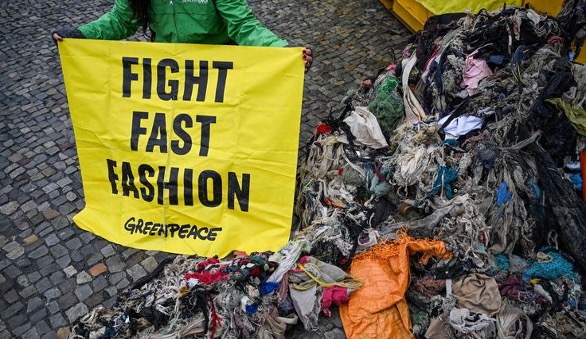
At least 80 billion garments are produced globally every year. That is ten times the population of the world. The culprit? Fast Fashion. About 70% of these garments are sold in the markets, but what about the rest 30% that remains unsold? Some luxury brands resort to burning their stock, a rather cost-effective way for them to maintain their ‘brand value’ and sense of exclusivity. For example, H&M has burned 12 tonnes of new unsold clothing annually since 2013 (Paton, 2018). Meanwhile, for our less pyromantic counterparts, those clothes remain stockpiled in landfills. You may be shocked to know that 15 million garments are being dumped in Ghana every week! Or the shuddering ‘Garment Graveyard’ at the Atacama Desert, Chile.
It is no surprise that the fashion industry produces much more stock than is needed. In 2023, the fashion sector generated an estimated 2.5 billion to 5 billion items of surplus inventory, valued at approximately $70 billion to $140 billion in revenue.

Overproduction
This phenomenon is known as ‘overproduction’. Simply put, this occurs when supply exceeds demand.
It occurs mainly because of a traditional manufacturing system that incentivises volume. If more items are purchased, the price of each garment becomes cheaper. Through over-supplying, companies can maintain a steady inventory by ensuring they have a surplus readily available. This surplus allows them to quickly adapt to changing market trends and demands. So when a new trend arises, they waste no time and can quickly make profits. To complement this archaic system, billions are put into marketing to increase sales. This helps companies dominate the supply chain and control the competition.
This also occurs because of marketing pressures. It seems that creating artificial demand for products through influencing and planned obsolescence plays a key role in overproduction today. It threatens the success of major businesses, creates losses in profit margins and leads to wastage in resources as well.
Impact
When there is an excess supply of goods, it leads to a glut in the market. This disrupts the market equilibrium, creating market insecurity. When there is reduced demand, companies want to cut down their losses; hence, it leads to job layoffs, creating widespread unemployment. For instance, major companies like Chanel, which eliminated more than 70 jobs in the US alone, and Burberry, which announced plans to reduce 20% of its global workforce, were reported by Bloomberg. The rise in unemployment rates creates a domino effect throughout the economy. Due to this increase in unemployment, consumer spending power declines because of the decreased income levels. This reduction in spending leads to a further drop in demand for goods and services, intensifying the issue of overproduction. The cycle perpetuates itself and leads to a vicious chain of economic decline.
Let’s not forget the heightened ecological impact, ranging from environmental pollution to resource depletion. The industry is currently responsible for 10% of CO2 emissions (Dottle and Gu, 2022), 35% of microplastics, and the usage of over 700 gallons of water for a single item of clothing.
Solutions
Every season, a new trend emerges, and lately, the number of micro-trends has boomed to the point that it has become difficult even for brands to predict demand. Evidently, a change in mindset is required: Brands would be better off producing based on consumer needs as and when they arise, not making predictions in an extremely volatile market. Due to the significant correlation between inventory turnover and profitability, effectively overseeing inventory can be one strategy that brands can implement.

With the advent of AI, it would be wise for companies to use technology to streamline their production processes. Now that digital fashion has become ‘fetch’, companies can also use machine-learning tools and generative AI to adopt a more customer-centric model to manage stock-outs. Effectively leveraging technology to decode data and trend insights can help identify early disruptions and improve end-to-end communication. Data-driven planning can also help improve forecasts to manage sales. In fact, Kering reported a 20 per cent accuracy improvement of its inventory forecasting when using AI in planning. Advanced analytics can help model scenarios across channels, thereby improving their overall efficiency and optimising their networks.
Another alternative could be embracing the on-demand manufacturing philosophy (production after the order is placed). The best way to address overproduction is by eliminating guesswork on people’s purchasing preferences. This would help to minimise overproduction while meeting client demands to the core. It also provides increased customer satisfaction as the item is produced to their tailored specifications.
The Three T’s of managing the supply chain must be given some weightage as well: Transparency, Traceability, and Team Management. By utilising technology and collaborating as a team, it will be easier to identify inefficiencies in the supply chain, cap bottlenecks in the supply chain, and check the movement of products and materials. It further helps in verifying the authenticity of materials (their sourcing) and also maintaining accountability. Furthermore, through collaboration, more informed decisions can be taken.
Before the fashion industry is buried under the mountain of its own unsold stock, brands should prioritise sustainability in their operations, rather than the current methods deployed. Patagonia, a paragon in circular fashion, has famously run many consumer awareness campaigns and recycling programs, and it prioritises longevity in its garments. Its Worn Wear campaign was a flagship initiative to cut down on garment waste. Taking inspiration, brands can also focus on utilising more sustainable materials like biodegradable textiles and recycled threads.
Conclusion
Fashion is extra. Extra glamour. Extra pizzazz. Extra stock. But in today’s world, we cannot let surplus inventory be a reason to disregard sustainable practices. Managing overproduction through technology, ethically and sustainably, is the need of the hour, and the fashion industry needs to make drastic changes in a world that can no longer afford its excesses.
References
- UCLA Sustainability. (2024, February 16). The fast fashion epidemic. UCLA Sustainability. https://sustain.ucla.edu/2024/02/16/the-fast-fashion-epidemic/
- Vogue. (n.d.). Overproduction in fashion. Vogue UK. https://www.vogue.co.uk/article/overproduction-fashion
- Business of Fashion. (2025). The state of fashion 2025: Inventory excess, stock, and supply chain. Business of Fashion. https://www.businessoffashion.com/articles/retail/the-state-of-fashion-2025-report-inventory-excess-stock-supply-chain/
- Fashion Revolution. (n.d.). Overcoming overproduction. Fashion Revolution. https://www.fashionrevolution.org/overcoming-overproduction/
- Zhang, Y., & Zhang, J. (2022). Overproduction in the fashion industry: Causes and consequences. Journal of Cleaner Production, 277, 239092. https://www.sciencedirect.com/science/article/pii/S2772390922000051
- WGSN. (n.d.). Could fashion forecasting technology help fashion’s overproduction problem? WGSN. https://www.wgsn.com/en/could-fashion-forecasting-technology-help-fashions-overproduction-problem
- McKinsey & Company. (2025). The state of fashion 2025. McKinsey & Company. https://www.mckinsey.com/~/media/mckinsey/industries/retail/our%20insights/state%20of%20fashion/2025/the-state-of-fashion-2025-v2.pdf