
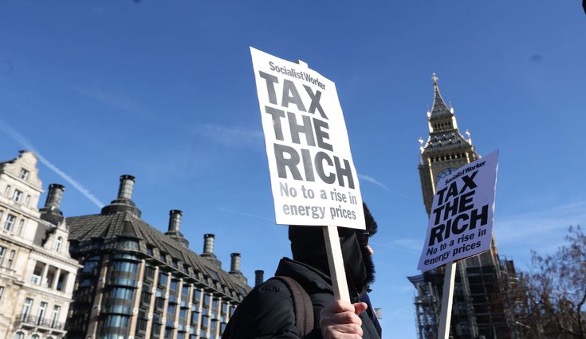

Every few years, a version of the same idea resurfaces in political debate: if governments simply taxed the wealth of the very rich, not just their income but the accumulated stock of what they own, inequality would shrink, revenues would swell, and the moral ledger of capitalism would be rebalanced.
The idea has intuitive appeal, philosophical weight and electoral popularity. It also has a rather poor track record.
Out of the 12 OECD countries that had a net wealth tax in 1990, only Norway, Spain and Switzerland have one now. Iceland and Spain temporarily brought back their wealth tax when economic problems arose; France opted to narrow its scope to high-value real estate in 2018. The trajectory is worth noticing. These were not radical or poorly governed states but mature democracies with sophisticated tax administrations. Most abandoned the wealth tax not because they stopped caring about inequality, but because the instrument kept failing to do what it was supposed to do.
Recent attempts have fared no better. In early 2026, New York City’s proposals to overhaul the estate tax and introduce an annual surcharge on high-value second homes both met swift criticism over capital flight, administrative complexity, and unintended burdens on middle-class owners. The ambition was similar. So were the objections. What follows is an attempt to understand why.
The Three Structural Problems
The base problem
Nearly every wealth tax introduced has been riddled with exemptions from the start. Business assets, pension funds, agricultural land, primary residences, artworks, and private equity stakes have routinely been carved out, either for political reasons or on the stated grounds that including them would harm economic activity or be too difficult to value.
As a result, most countries have a tax on wealth defined to be imposed on a very narrow slice of wealth, which often is not the wealthiest slice. For instance, in India, where the wealth tax was in effect from 1957 to 2015, the base was confined to unproductive assets such as jewellery, urban land, and luxury cars, while business assets and listed securities were exempt. Since the bulk of elite wealth was held in exactly those exempt categories, the tax was structurally incapable of reaching what it was meant to reach.
The narrower the base, the more the remaining taxpayers can shift into exempt categories. This is not fraud, it is rational behaviour. Wealthier households have more sophisticated advisers and more flexibility to restructure their holdings. The people most affected by a narrowly drawn wealth tax tend to be those with fewer options to reorganise, not the ultra-rich.
The valuation problem
Taxing wealth requires knowing what wealth is worth. For publicly traded shares, this is easy. For private companies, real estate in illiquid markets, artwork, jewellery, and stakes in family businesses, it is not. Valuations must be updated regularly, are routinely contested, and invite litigation. The administrative cost to both the tax authority and the taxpayer is substantial.
In India, real estate values in cities were growing rapidly during the decades the wealth tax was in force, but declared values in registration documents bore little relation to actual transaction prices. Underreporting was widespread and difficult to challenge systematically. The tax ended up being enforced selectively and inconsistently, which is almost worse than not enforcing it at all.
The liquidity problem
A wealth tax is owed every year regardless of whether the underlying assets generate any income. An entrepreneur whose net worth is tied up in an unlisted company, a farmer with valuable land, and a retiree whose assets are in a family home all face the same problem: they may owe more in annual wealth tax than they can easily pay from income. This forces asset sales, which may be disruptive, economically wasteful, or simply impossible if the asset is illiquid.
High exemption thresholds are sometimes proposed as a solution, but this tends to create a cliff effect and does not eliminate the problem for those above the threshold with concentrated illiquid holdings.
The avoidance problem
Wealthy taxpayers are internationally mobile in ways that ordinary taxpayers are not. After raising its wealth tax, a large portion of Swedish Capital migrated offshore. Similarly, after tightening up the wealth tax in Norway in 2022, dozens of high profile billionaires and entrepreneurs moved to Switzerland. The effect was visible enough to generate significant domestic political debate.
The avoidance need not even be international. Domestic structures, trusts, foundations, and holding companies can shelter assets from a narrowly designed wealth tax just as effectively. The evidence from countries that have tried suggests that the tax often changes how wealth is reported and structured more than it changes how much wealth accumulates.
Why Three Countries Have Kept Theirs
The survival of the wealth tax in Norway, Switzerland, and Spain is instructive, though the lessons are somewhat different in each case.
Switzerland’s wealth tax is one of the oldest and most stable forms of wealth taxation in the world. It operates at the cantonal level rather than federally, which has resulted in very different thresholds and rates between cantons. Additionally, unlike most other countries, the exemption thresholds are relatively low, meaning the tax applies to a significant number of people in the middle class, not just the wealthy. With such a broad tax base, Switzerland raises substantial amounts of revenue. For instance, in 2023, it raised roughly 9.5 billion euros from individual wealth, accounting for approximately 4%of the total tax revenues. Moreover, because the cantonal wealth tax system is somewhat decentralised, there has been an opportunity for local experimentation and competition to shape how the tax system operates.
The wealth tax in Norway has existed since 1892 and has its origins in the country’s political culture, where redistribution of wealth is seen as a standard role for government. With a wealth threshold of around 145,000 euros, Norway’s wealth tax impacts almost 720,000 people or about 20% of the adult population. Over the past years, revenue from Norway’s wealth tax has noticeably increased, from approximately 27 billion kroner in 2022 to 34 billion kroner in 2025.
However, one of the key challenges facing Norway is the growing number of wealthy individuals relocated to Switzerland and other lower-tax jurisdictions since the rates were increased in 2022. The government’s response, tightening exit taxes on capital leaving the country, has itself attracted criticism. Norway’s wealth tax may be surviving, but it is not without controversy.
Spain’s situation is more complicated. The wealth tax operates through overlapping regional and national systems, with rates varying considerably across autonomous communities. Several regions, including Madrid, offer 100 per cent relief from the regional tax. A national solidarity wealth tax, introduced in 2022 originally as a temporary measure during a cost-of-living crisis, has since been made permanent and applies to those with net assets above 3 million euros. Spain’s experience shows that a wealth tax can persist in a fragmented political system, but at the cost of significant complexity and internal competition between jurisdictions.
The common thread across all three is not that they have solved the fundamental design problems. They have not. It is rather that each has found ways to embed the tax in broader fiscal and political structures that give it some staying power, whether through federalised adaptation in Switzerland, deep egalitarian norms in Norway, or political coalition dynamics in Spain.
The Indian Experience
India’s story is among the most instructive failures on record. The Wealth Tax Act was introduced in 1957, inspired in part by the economist Nicholas Kaldor’s advisory report to Nehru’s government, which argued that a comprehensive direct tax system required taxing wealth alongside income. The ambition was clear: reach the old money, zamindari-era land holdings, and business fortunes that were escaping the income tax net.
Over nearly six decades, the reality was almost entirely the opposite. When Finance Minister Arun Jaitley abolished the tax in the 2015 Union Budget, his reasoning was direct: the tax generated “more pain than gain”. It was replaced with a 2 per cent surcharge on very high incomes, which in its first year alone raised more revenue than the wealth tax had managed in decades.
The structural failure in India illustrates the base problem at its most extreme. By exempting productive business assets, listed securities, and agricultural land, the tax placed the bulk of elite wealth structurally outside its own reach. What remained was gold and jewellery, heavily underdeclared given the scale of the informal economy, and urban real estate, where valuations were systematically gamed through underreporting in sale registrations.
None of this meant the distributional concern was wrong. India’s concentration of wealth grew significantly through the post-liberalisation era, with the largest fortunes expanding by extraordinary multiples through the 2010s and 2020s, a period during which median real wages stagnated, and rural distress deepened. The problem was not the goal but the instrument
Towards a More Balanced Approach: Alternatives to Wealth Tax
The case against a net wealth tax does not amount to a case against taxing concentrated wealth. The distributional concern is legitimate and well-supported by evidence. The question is whether better designed instruments can accomplish what the wealth tax has repeatedly failed to do. The four main alternatives each have genuine advantages over an annual levy on net wealth, but each also carries its own structural problems.
Capital Gains Reform and Mark-to-Market Taxation
Realisation-based capital gains taxes allow wealthy holders to defer liability indefinitely by borrowing against appreciated assets rather than selling. A market-to-market system, taxing gains as they accrue annually, would eliminate the incentive and could raise an estimated 180 billion dollars per year in the United States. Valuation is straightforward for publicly traded assets and manageable for private holdings through retrospective adjustment at the point of sale. Liquidity concerns can be addressed by spreading liability over several years. The primary obstacle is political.
Land Value Taxation
A tax on the unimproved value of land is economically efficient because land supply is fixed and appreciation is largely unearned. The practical difficulties of separating land value from improvements and managing transition effects on credit markets are solvable in principle. The deeper problem remains political. Henry George proposed it in 1879, and outside Estonia and parts of Australia, it has been implemented at a meaningful scale almost nowhere since.
Inheritance and Estate Taxes
Inheritance taxes are administratively simpler than annual wealth taxes and address concentration as its most indispensable point, that is, intergenerational transfer without productive contribution. In practice, they roughly raise 0.5% of total tax revenues across OECD countries, because exemptions have progressively hollowed out the base. The pattern is consistent: inheritance taxes begin with ambition and erode through the same political pressures that undermine wealth taxes.
International Coordination
Brazil’s 2024 G20 proposal for a 2% minimum tax on billionaire wealth based on Gabriel Zucman’s research could raise 200 to 250 billion dollars annually from approximately 3,000 individuals. The G20 fell short of formal endorsement but agreed to cooperate on taxing ultra-high-net-worth individuals. If coordination removes the option of jurisdictional arbitrage, the avoidance calculus changes substantially, though the gap between political commitment and binding enforcement remains wide.
Conclusion
The case for taxing concentrated wealth more effectively is not seriously in dispute. What the historical record disputes is whether the instruments typically proposed to do so are capable of surviving contact with the political systems that must enact and maintain them. The wealth tax has failed repeatedly because its design problems, a narrow base, valuation difficulties, liquidity pressures and capital flight, have proved resistant to technical fixes in the absence of sufficient political will to close the loopholes that render it ineffective. The alternatives examined here are, on balance, administratively more tractable, and the difficulties they present are substantially political rather than technical. The most affected by the capital tax reform are also best positioned to shape its rules.
The wealth tax will return to political debate because the inequality it seeks to address is real and visible. The more important question is whether, when it does, the conversation moves quickly enough from the symbolism of the proposal to the design details that determine whether it will work. That requires sustained political commitment to design quality and base protection over time, not merely the passage of a tax that then hollows out across decades of accumulated exemptions.
References
- Perret, S. (2021). Why were most wealth taxes abandoned, and is this time different? Fiscal Studies, 42(3–4), 539–563. https://doi.org/10.1111/1475-5890.12278
- Starosciak, M., & Starosciak, M. (2025, October 8). Wealth taxes don’t work. Infinium Investment Advisors, LLC. https://infiniumadvisors.com/taxes/wealth-taxes-dont-work/
- Morelli, S., Nolan, B., Palomino, J. C., & Van Kerm, P. (2025). The influence of inheritances on wealth inequality in rich countries. Journal of Public Economics, 247, 105398. https://doi.org/10.1016/j.jpubeco.2025.105398
- OHCHR. (n.d.). G20: Leaders must show courage to tax the super-rich to rescue the 2030 Agenda for Sustainable Development, say experts. https://www.ohchr.org/en/press-releases/2024/11/g20-leaders-must-show-courage-tax-super-rich-rescue-2030-agenda-sustainable
- Ramakumar, R. (2024, August 23). Inheritance taxes: A key step towards reducing economic inequality. Frontline. https://frontline.thehindu.com/politics/wealth-inequality-india-inheritance-tax-resources-entrepreneurship/article68125209.ece
- Review of the arguments for and against inheritance taxation: Inheritance Taxation in OECD Countries. (2021, May 11). OECD. https://www.oecd.org/en/publications/inheritance-taxation-in-oecd-countries_e2879a7d-en/full-report/component-5.html
- Spain and Brazil push global action to tax the super-rich and curb inequality. (2025, July 3). UN News. https://news.un.org/en/story/2025/07/1165146
- Ayres, M., & Caram, B. (2024, May 23). EU Tax Observatory eyes broader G20 support for minimum tax on billionaires. Reuters. https://www.reuters.com/world/europe/eu-tax-observatory-eyes-broader-g20-support-minimum-tax-billionaires-2024-05-23/
- More thoughts on a wealth tax and alternatives – CEPR. (2020, April 30). CEPR. https://cepr.net/publications/more-thoughts-on-a-wealth-tax-and-alternatives/
- IFC Review. (2026, February 26). NETHERLANDS: Dutch Government bows to pressure over controversial tax on unrealised gains | IFC Review. https://www.ifcreview.com/news/2026/february/netherlands-dutch-government-bows-to-pressure-over-controversial-tax-on-unrealised-gains/
- Gray, D. (2026, February 17). Netherlands unrealised gains tax and what it means for startups, founders, and Europe’s VC ecosystem. Contextual Solutions. https://www.contextualsolutions.de/blog/the-netherlands-unrealized-gains-tax-what-it-means-for-startups-and-innovation
- Enache, C. (2024, June 26). Wealth tax Impact: details & analysis | Tax Foundation. Tax Foundation. https://taxfoundation.org/research/all/eu/wealth-tax-impact/
- UN DESA Policy Brief No. 168: Net Wealth Taxes: How they can help fight inequality and fund sustainable development. (n.d.). UN DESA Publications. https://desapublications.un.org/policy-briefs/un-desa-policy-brief-no-168-net-wealth-taxes-how-they-can-help-fight-inequality-and
- Adam, S., & Miller, H. (2025, October 7). A wealth tax would be a poor substitute for properly taxing the sources and uses of wealth. Institute for Fiscal Studies. https://ifs.org.uk/articles/wealth-tax-would-be-poor-substitute-properly-taxing-sources-and-uses-wealth
- Enda, G., & Gale, W. G. (2020, February 14). What are capital gains taxes and how could they be reformed? Brookings. https://www.brookings.edu/articles/what-are-capital-gains-taxes-and-how-could-they-be-reformed/
- How should we tax the rich. (2019, September 10). Tax Policy Center. https://taxpolicycenter.org/taxvox/how-should-we-tax-rich
- Raising capital gains taxes would reduce inequality without economic costs – Inequality.org. (2025, March 25). Inequality.org. https://inequality.org/article/capital-gains-taxes-inequality/
- Starosciak, M., & Starosciak, M. (2025, October 8). Wealth taxes don’t work. Infinium Investment Advisors, LLC. https://infiniumadvisors.com/taxes/wealth-taxes-dont-work/